
Store camping gear in a small apartment by matching each item to one of four no-drill zones: flat gear like tents and sleeping pads under the bed (8+ inches of clearance), packs and bags on a closet rod (about 66 inches high), lightweight items on an over-the-door hook rack, and odds and ends on adhesive wall hooks rated from about 0.5 to 15 pounds. None of these need a screw, nail, or landlord sign-off.
Key Takeaways
- Four no-drill zones fit camping gear into a studio or one-bedroom: under-bed, closet rod, over-the-door, and adhesive wall hooks.
- Under-bed storage needs at least 8 inches of clearance, since standard storage bins run 6 to 8 inches tall; measure before you buy bins or stack risers under the bed frame.
- A standard reach-in closet rod sits about 66 inches from the floor in a closet that’s at least 24 inches deep, enough to hang packs, sleeping bags, and rain jackets instead of folding them into bins.
- Adhesive wall hooks are individually rated anywhere from about 0.5 pounds to 15 pounds; check the specific hook’s printed limit before you load it.
- Almost none of this needs your landlord’s permission, but check your lease before adding anything beyond adhesive strips, tension rods, or freestanding furniture.
How Do You Store Camping Gear in a Small Apartment Without Drilling?
Most advice for small-space camping storage lumps everything into one pile of generic tips: get bins, use vertical space, label things. That skips the actual question, which is where each specific item should go when you don’t have a garage, shed, or spare closet to spread out into. The graphic and table below sort gear into four zones based on how it’s shaped and how often you need it, each sized to a real studio or one-bedroom apartment and each renter-safe.
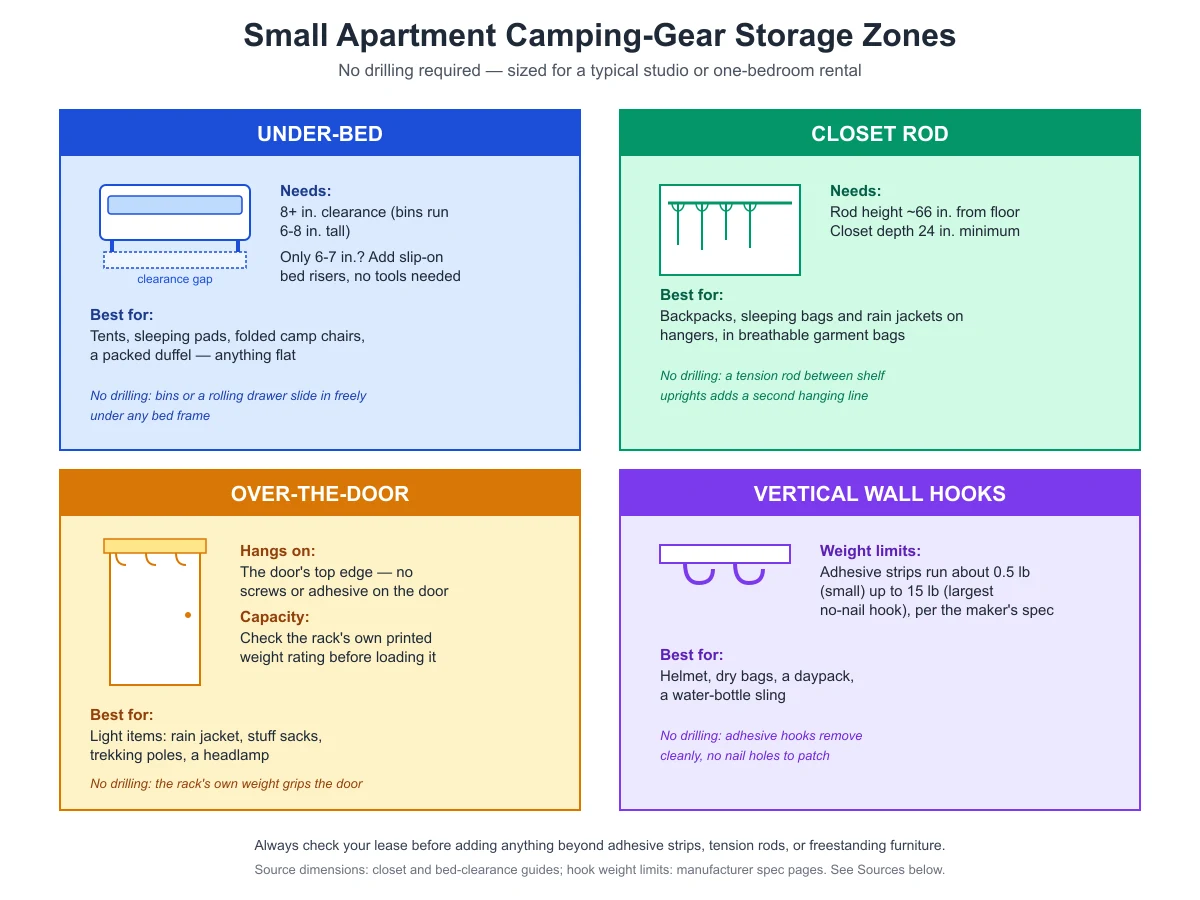
| Storage zone | Typical capacity / dimension | Best for | No-drill method |
|---|---|---|---|
| Under-bed | Needs 8+ in. of clearance; standard storage bins run 6-8 in. tall | Tents, sleeping pads, folded camp chairs, a packed duffel | Flat bins or a rolling under-bed drawer slide in with no tools |
| Closet rod | Single rod sits ~66 in. high; reach-in closets run at least 24 in. deep | Backpacks, sleeping bags, and rain jackets on hangers | A tension rod between shelf uprights adds a second hanging line |
| Over-the-door | Hangs on the door’s top edge; capacity is set by the rack’s own printed rating | Light items: rain jacket, stuff sacks, trekking poles, a headlamp | The rack’s own weight grips the door, no screws or adhesive on the door itself |
| Vertical wall hooks | Adhesive strips run about 0.5 lb (small) up to 15 lb (largest no-nail hook) | Helmet, dry bags, a daypack, a water-bottle sling | Adhesive hooks remove cleanly, with no nail holes to patch |
One rule overrides the rest: if you’re not sure a zone can hold an item’s actual weight, check the manufacturer’s printed rating on that specific bin, rack, or hook before loading it. The numbers above are typical ranges, not guarantees for every product.
How Much Under-Bed Storage Can You Actually Fit?
Clearance is the limit, not floor space. Standard under-bed storage bins run 6 to 8 inches tall, so you want at least 8 inches of clearance measured from the floor to the lowest part of the bed frame, not the top of the frame rail. A typical bed frame with legs or a simple metal frame usually clears this; a low platform bed often doesn’t, especially once a mattress and foundation sit on a solid base.
If your bed sits lower than 8 inches off the floor, slip-on bed risers raise the frame a few inches without any tools or hardware, and they typically work under any leg style. Once you have the clearance, flat gear is what belongs here: a rolled tent, sleeping pads, folded camp chairs, or a fully packed duffel. Avoid using this zone for anything that needs to breathe for the long term, like a sleeping bag stored loose and uncompressed; the shallow, enclosed space under a bed traps more dust and gets checked on less often than an open shelf.
How Do You Use a Closet Rod for Camping Gear?
A single closet rod typically sits about 66 inches from the floor, and a reach-in closet runs at least 24 inches deep, with the rod set roughly 12 to 14 inches from the back wall so clothes and gear can hang without crowding the wall behind them. That’s enough depth and height to hang a backpack by its haul loop, a sleeping bag in a breathable garment bag, or a rain jacket alongside your regular clothes.
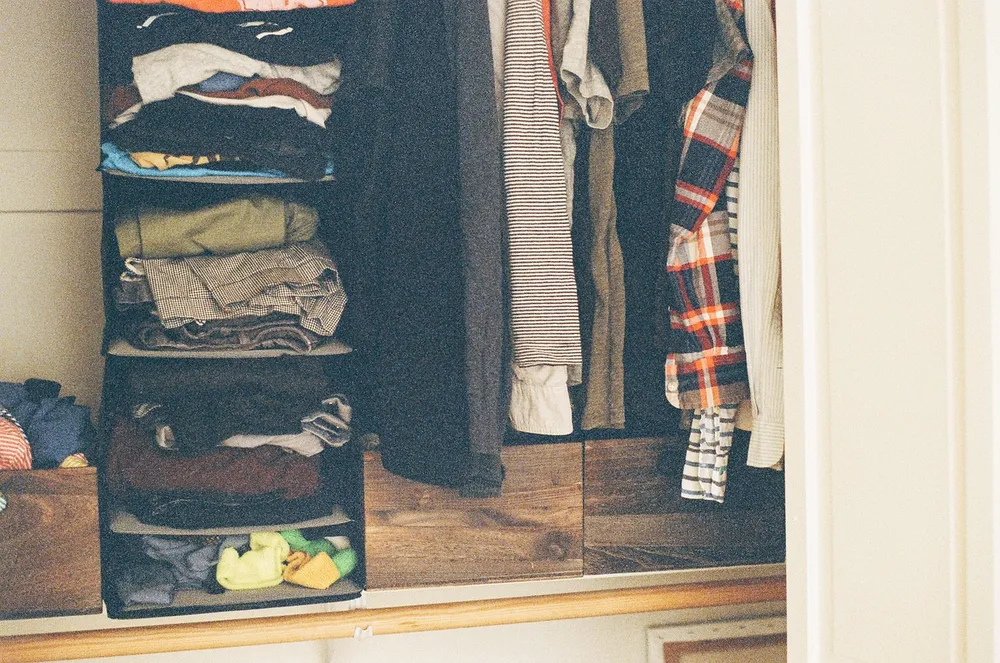
If the single rod is already full of regular clothes, a tension rod wedged between two shelf uprights or the side walls adds a second, lower hanging line without any hardware. This works well for a second backpack or a stuff-sack of smaller items hung from a carabiner. Keep anything you hang here loose rather than compressed; a sleeping bag or jacket crammed against other clothes for months loses loft the same way it would in a tight stuff sack.
Can You Use Over-the-Door Storage for Camping Gear?
Yes, and it’s one of the few storage zones that adds capacity without using any floor, shelf, or wall space at all. An over-the-door hook rack hangs over the top edge of an interior door and holds its position with its own weight and a padded bracket, so it needs no screws, adhesive, or drilling on the door itself. This works on a hollow interior door just as well as a solid one, since the rack never puts load on the door’s face.
The tradeoff is capacity: these racks are built for lightweight gear, not your heaviest pack. A rain jacket, a few stuff sacks, trekking poles, or a headlamp on a hook are all reasonable loads. Always check the specific rack’s own printed weight rating before hanging anything heavier, since that rating varies by product and by how many hooks you load at once.
How Do You Add Vertical Wall Hooks Without Damaging Rental Walls?
Removable adhesive hooks and strips are the renter-safe way to add wall storage, since they hold without a nail or screw and come off cleanly without leaving a hole. Weight limits vary a lot by size: small adhesive wire hooks are rated for roughly half a pound, medium hooks for around 3 pounds, larger hooks for about 5 to 10 pounds, and the largest no-nail utility hooks for up to about 15 pounds, according to the manufacturer’s own product specifications.
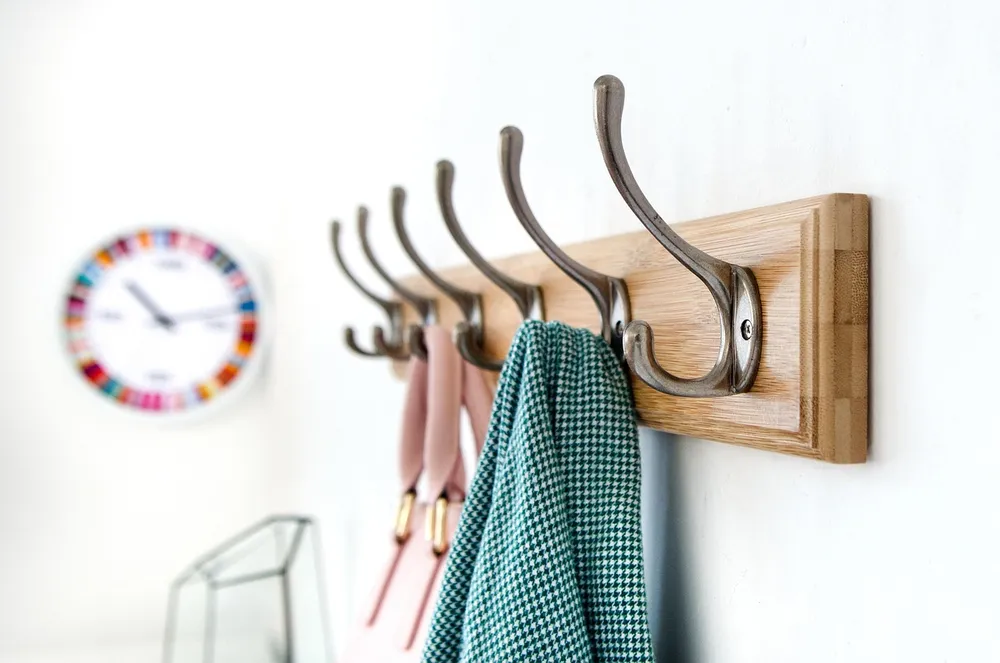
Match the hook’s rating to the item, not the other way around: a climbing helmet or a full daypack needs a hook rated near the top of that range, while a water-bottle sling or a set of keys can use one of the smallest hooks. Mount hooks on a smooth, clean, painted drywall surface for the strongest hold, and avoid textured or freshly painted walls where the adhesive hasn’t fully cured, since both reduce how much weight the strip can actually hold.
What Should Renters Check Before Adding Any of These?
Almost everything above needs zero permission: bins under a bed, a tension rod in a closet, an over-the-door rack, and adhesive wall hooks are all designed to leave no lasting mark on the apartment. Even so, read your specific lease before you start. Some leases restrict adhesive products on painted walls, limit what can hang on doors, or have specific rules about what counts as an alteration. If you want anything more permanent, like a mounted shelf or an anchored rack, ask your landlord first. That’s a different category of change from anything in this guide.
If you’re trying to fit everything into these four zones and it still feels like too much gear for too little space, it’s worth asking whether every item earns its spot before you buy more storage. Our How to Declutter Camping Gear You Don’t Use Anymore guide walks through a keep/repair/sell/donate decision for gear that’s been sitting untouched.
Where Does Apartment Storage Fit Into a Bigger Camping Gear System?
An apartment’s biggest advantage over a garage or shed is climate: most apartments are already heated and cooled, so the moisture and temperature swings that threaten gear in an unconditioned garage mostly aren’t a concern here. The real constraint is volume, which is exactly what the four zones above are built to solve. For the full decision system across every kind of storage space, including how an apartment compares to a garage, shed, or closet in a house, see our complete camping gear storage system guide.
Small-space living also rewards pre-packed kits over loose piles of gear, since you don’t have room to spread everything out and sort through it before every trip. Building a car-camping kit, a backpacking kit, and a quick overnight kit ahead of time means you grab one bag instead of assembling gear from four different zones each time. Our How to Organize Camping Gear by Trip Type (Grab-and-Go Kits) guide covers building those kits in detail.
Frequently Asked Questions
Do I need my landlord’s permission for any of this?
Almost never. Bins under a bed, a tension rod in a closet, an over-the-door hook rack, and adhesive wall hooks are all designed to be removed without damage. Check your specific lease for any restriction on adhesive products or door hardware, and ask first if you want to add anything more permanent, like a mounted shelf.
What if my bed doesn’t give me enough clearance underneath?
Standard under-bed bins run 6 to 8 inches tall, so measure your actual clearance from the floor to the lowest part of the frame before buying any. If you’re short on height, slip-on bed risers add several inches under any leg style without tools, which usually opens up enough room for a standard bin.
Can I use an over-the-door rack on a hollow interior door?
Yes. Over-the-door racks hang on the door’s top edge and hold their position with their own weight and a padded bracket, so they don’t put load on the door’s face the way a screw-mounted hook would. That makes them suitable for hollow interior doors as well as solid ones, within the rack’s own printed weight limit.
How do I stop camping gear from taking over my closet?
Reserve the closet rod for items that actually benefit from hanging, like packs, sleeping bags, and jackets, and move flat or boxed gear to the under-bed zone instead. A tension rod adds a second hanging line for overflow without needing more closet floor space.
What’s the best place for a tent if I don’t have a garage or shed?
A clean, fully dry tent stores well under the bed in its stuff sack, since it’s compact and doesn’t need daily access. Make sure it’s completely dry before you pack it away; packing a damp tent in an enclosed space like under a bed is one of the fastest ways to start mildew.
Sources
- TaskRabbit — Here’s the Right Shelf and Closet Rod Height
- Hunker — What Is the Proper Height for Closet Rods & Shelves?
- Snug Casa — How Tall Should a Bed Be? Frame Height, Mattress Depth and Knee Height
- Command Brand (3M) — Product Weight Limits Guide
By campstorageguide.com Editorial Team. Last updated: November 12, 2026.